
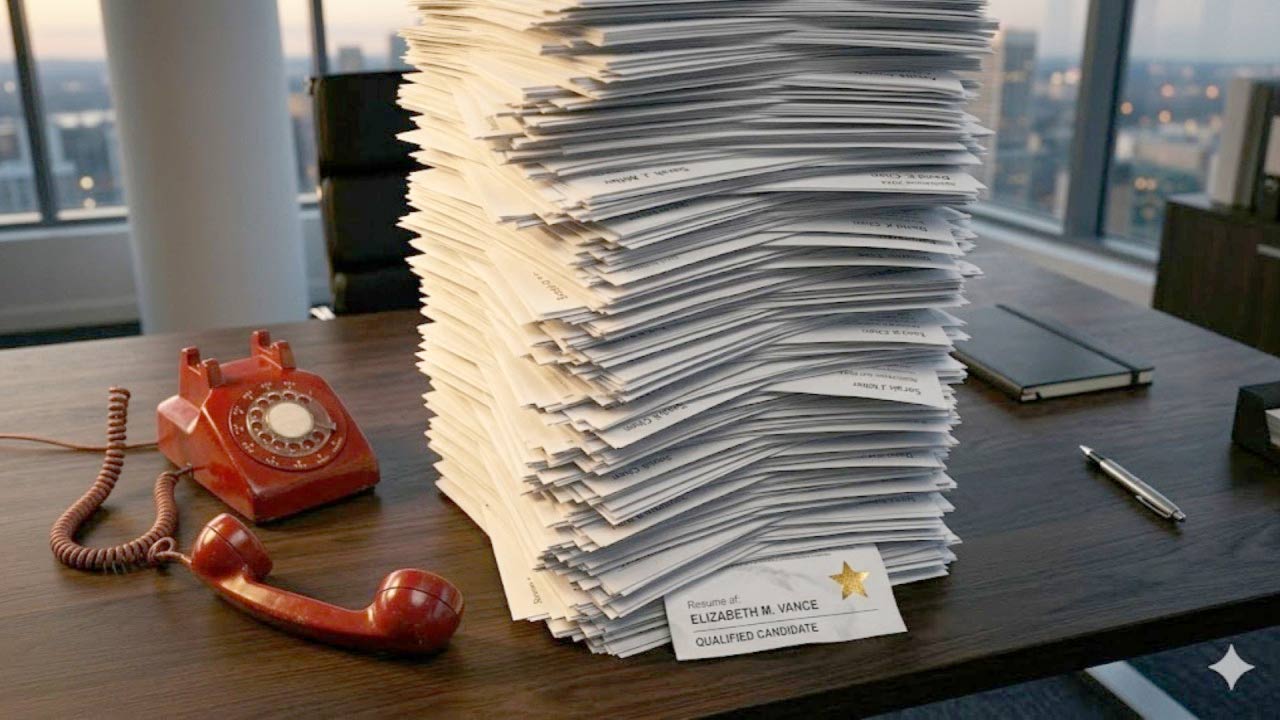
Something is breaking in hiring right now, and it is bigger than a bad shortlist.
A role goes live. Applications flood in. Hiring managers expect a strong slate. Instead, they get noise, near-matches, inflated resumes, and a shortlist that barely exists. Three callbacks from 276 submissions is no longer unusual. It is becoming a pattern.
That is the real puzzle.
Applicant volume is up, but usable fit often is not.
LinkedIn-backed reporting indicates that applications per open role in the U.S. have roughly doubled since spring 2022, even as both candidates and recruiters report growing frustration with the process.
So Where Did It Break?
The honest answer is that it broke in several places at once. That is exactly why it has become so hard to fix.
Start with the job description. Too many roles are still written like historical records instead of live market documents. They are patched together from old requirements, internal wish lists, and cross-functional compromises. That produces a familiar result — a posting that is too vague for strong candidates, too demanding for qualified but imperfect candidates, and too noisy for everyone else.
Then look at how candidates present themselves. Skills-based hiring is advancing, especially at the entry level. Fast Company, citing NACE, reported that 65% of employers surveyed use skills-based hiring practices for entry-level hires. But many candidates still lead with proxies rather than proof — stale credentials, generic summaries, and buried evidence of what they can actually do.
The screening layer is part of the problem too. Many organizations are still using filters built for an earlier labor market. The workforce has changed. Candidate paths have changed. Skill acquisition has changed. But in many cases, the screening logic has not. That mismatch creates a predictable outcome — the system keeps sorting for familiarity while the market rewards adaptability.
And then there is speed.
Hiring still moves at the pace of approvals, scheduling friction, and internal alignment meetings. Candidates move much faster. In a slower market, employers may feel they have more leverage. In practice, many of the best people are still evaluating multiple options at once and disappearing while companies are still debating first-round calendars. Indeed Hiring Lab has shown that the labor market has rebalanced sharply from the extreme tightness of 2021–2022, but that does not mean strong candidates wait around indefinitely.
So What Actually Improves Shortlist Quality?
Three things matter most. First, rewrite job descriptions around the role as it exists now, not the one inherited. Second, screen harder for demonstrated capability and real outputs — not just familiar proxies like brand-name employers, degree screens, or years-of-experience thresholds. Third, shorten the time between application and first conversation. A weak fit problem becomes worse when paired with a slow process.
This is the hiring paradox of 2026 — more applications, more tools, more filtering, and often less confidence in the result.
The issue is not just that too many people are applying. It is that too many hiring systems are still optimized for the wrong signals.
That is frustrating. But it is also fixable.
Where is the real bottleneck in your organization right now — the job description, the screening logic, or the speed of the process?